Seven Major Forms of Photographic Storytelling
Written by Abin Alex and Anu Joseph.
Abstract
This guide sets out the seven major forms of photographic storytelling: single image, photo series or sequence, photo story, photo experience, photo article, photo essay and photo novel. For each form it gives the question the form answers, its voice, writing style and structure, where the images sit and how captions and cutlines are written, with a page layout and a teaching example. It closes with how chapters in different forms join into one book with one idea. The framework comes from the authors' teaching at Creative Hut Academy.
Keywords: Photographic storytelling; photo story; photo essay; photo article; photobook
- What is photographic storytelling?
- How do the seven forms compare?
- What is a single image?
- What is a photo series or sequence?
- What is a photo story?
- What is a photo experience?
- What is a photo article?
- What is a photo essay?
- What is a photo novel?
- How does one book hold one idea?
- How do you find a theme and join the chapters?
- In what order do the pages of a student book go?
What is photographic storytelling?
Short answer. Photographic storytelling is telling a story, a set of facts or an idea through photographs and the words placed with them. The form you choose decides the voice, the structure, how many images you need and where they sit.
- The seven major forms of photographic storytelling are a teaching framework by Abin Alex, developed over 25 years of teaching at Creative Hut Academy. Each form answers a different question, and Table 1 compares them side by side.
- Single image: one photograph that carries its whole message on its own.
- Photo series or sequence: a group of photographs on one subject. In a sequence the order is fixed.
- Photo story: what happened, told in order from outside the event.
- Photo experience: how an event felt to the photographer, told in first person.
- Photo article: the researched facts of a topic, with photographs that illustrate each fact.
- Photo essay: one claim, argued with images that each add new evidence.
- Photo novel: a fictional story in photographs, with speech balloons, thought bubbles and narration boxes.
Cham tip
How to write a prompt
A good prompt gives an AI tool the same brief an editor would give you. Write it in seven parts, in this order.
- Role. Tell the AI who to be: a photo editor, a fact checker, a writing mentor.
- Form. Name the form and the question it answers, for example: a photo story, which answers “What happened?”.
- Material. Describe what you shot: subject, place, date and how many photos. Read each photo with the 5 C's (Cham advanced tip below) and add your notes. Add the facts you have checked.
- Voice and style. Give the voice, the tense, the writing style and the structure from the form's table.
- What to write. List exactly what you need back, with its limits: title, Summary of 80 to 150 characters, captions of 1 to 4 words with a colon, cutlines of 12 to 25 words.
- Rules. Tell the AI to write in plain, natural English, to use only your facts, to write [ask me] where something is missing, and to use Indian English.
- Check. Ask the AI to check its draft against the form's rules and tell you what breaks them.
Cham advanced tip: read the image first
The 5 C's in Photography are a teaching framework by Abin Alex, developed over 25 years of teaching at Creative Hut Academy. They work in three stages: Stage I, capturing; Stage II, editing; Stage III, reading. Here you use Stage III, reading, for step 3, Material: before you write the prompt, read each photograph with the 5 C's, in this order:
- Components: what and who is in the frame.
- Composition: where things are placed and how the frame is organised.
- Contrast: light and shadow, and what they make stand out.
- Clarity: what is sharp: focus, depth of field and surface.
- Colour: the colours the image carries.
Write one short line for each C. For a long set, do it at least for the opening image and the peak image. The AI then describes what your photograph shows, not what it guesses.
Cham instructionThe AI drafts, you decide. Check every fact, rewrite the draft in your own words and add what only you saw. Never hand in text you cannot explain. If AI helped, say so in your credit line, for example “Drafted with AI assistance”.
Cham tipDecide the form before you shoot. It sets how many pictures you need and how you write.
Cham taskChoose one subject and write which of the seven forms fits it best, and why.
How do the seven forms compare?
Short answer. Four labels keep the forms apart: the question it answers, the voice, the writing style and the structure.
Table 1. The seven major forms compared.
Every form takes a title and a byline. Every form takes a one-line Summary of 80 to 150 characters except two: a single image has an optional title and no Summary, and a photo novel has an optional tagline instead.
Body shapes
Four shapes a body of text can take
Inverted pyramid
The most important fact first, then detail, then background.
Pyramid
A small start that builds to a peak, then resolves.
Hourglass
A wide opening with the claim, a narrow middle of evidence, a wide close on meaning.
Chronological
Strict time order.
Figure 1. Four shapes a body of text can take.
Cham tipWhen two forms seem to fit, compare the voice first. It usually settles the choice.
Cham taskPick two forms from Table 1 and write the four labels that separate them.
What is a single image?
Short answer. A single image is one photograph that carries its whole message on its own. It is described either with a caption and cutline, or with one paragraph, and never with an introduction, body and conclusion.
Example
Morning rush:
A conductor counts coins on a tram near Esplanade in Kolkata on Monday.
13 words, no “I”, and it runs who and what, then where, then when. In a book, “on Monday” becomes a date.
Cham case study
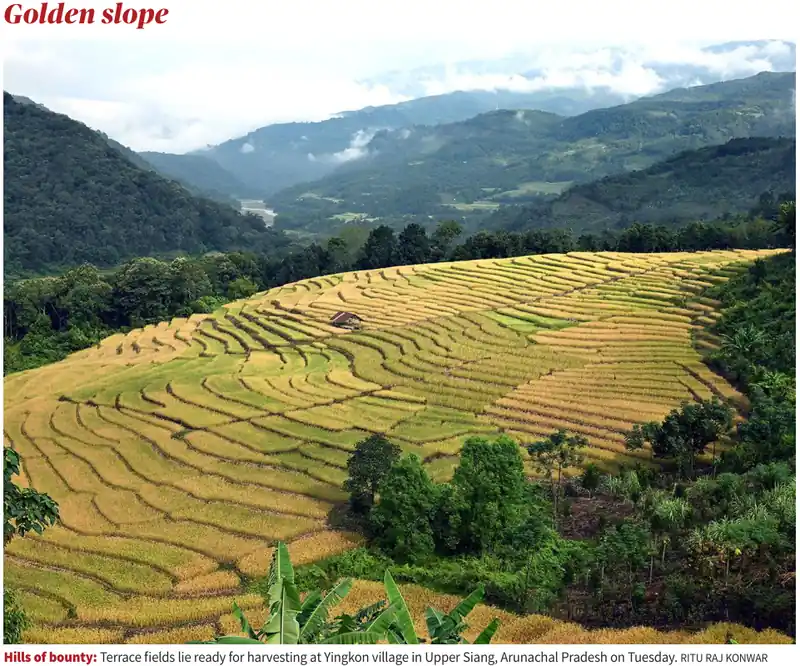
Figure 2. A single image in The Hindu
- Title
- Golden slope, set above the photograph.
- Caption
- Hills of bounty: bold, ends with a colon and names the mood.
- Cutline
- Third person, present tense, running what, then where, then when.
- Credit
- Ritu Raj Konwar, placed after the cutline.
Click the image to enlarge. The Hindu, 4 November 2026 (Konwar, 2026).
Cham case study
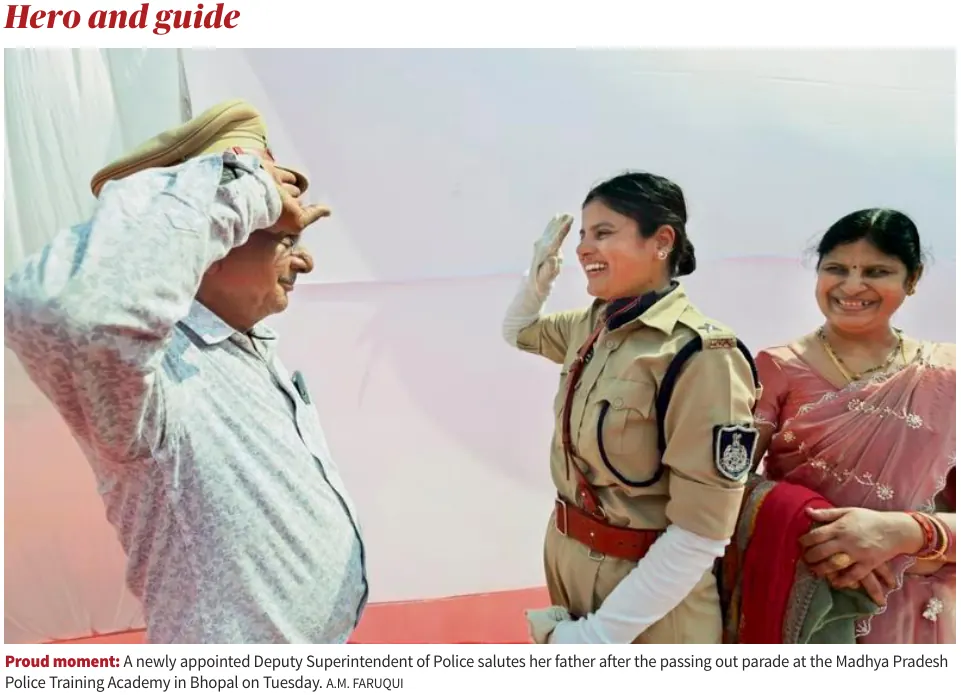
Figure 3. A model single image in The Hindu
- Title
- Hero and guide, set above the photograph.
- Caption
- Proud moment: names the feeling of the frame.
- Cutline
- One sentence: who (a new Deputy Superintendent of Police), what (salutes her father), where (Madhya Pradesh Police Training Academy, Bhopal), when (Tuesday).
- Credit
- A.M. Faruqui, after the cutline.
Click the image to enlarge. The Hindu, 4 November 2026 (Faruqui, 2026).
Cham case study
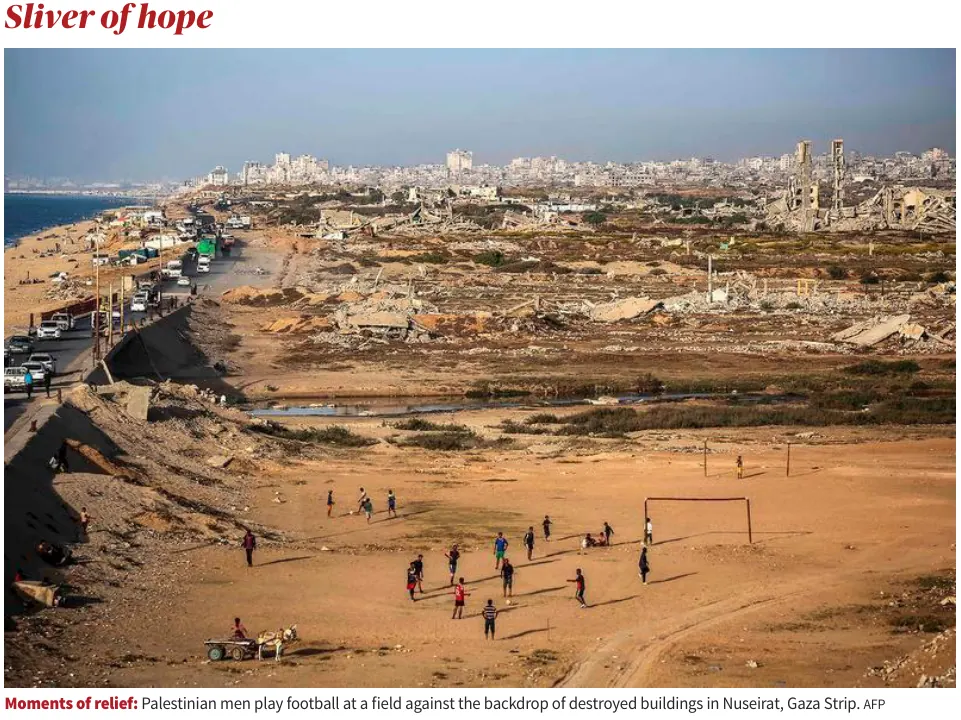
Figure 4. Check yourself: what is missing?
- Title
- Sliver of hope.
- Caption
- Moments of relief:
- Cutline
- Palestinian men play football at a field against the backdrop of destroyed buildings in Nuseirat, Gaza Strip.
- Credit
- AFP.
Which part of the inverted pyramid is missing from the cutline?
When. The cutline gives who, what and where, but no day or date.
Click the image to enlarge. The Hindu, 4 November 2026 (AFP, 2026).
Caption and cutline examples
The caption is a short bold label. The cutline says who and what, then where, then when.
Cham tipRead your cutline aloud. If it needs a second sentence, the photograph is not doing its job.
Cham taskShoot one frame of a street scene and write its caption, cutline and credit.
You are a news photo editor.
I am writing the caption and cutline for a single image. It answers: “What is here?”
My photo, read with the 5 C's:
Components: a tram conductor counting coins, passengers behind him.
Composition: the conductor on the left third, the aisle leading into the frame.
Contrast: soft window light on his hands, the aisle in shade.
Clarity: shallow depth of field, sharp on his hands and the coins.
Colour: a muted blue uniform against the warm wood of the tram.
Facts: near Esplanade, Kolkata, on Monday 2 March 2026 at 7.40 a.m. Photographer: [your name].
Voice and style: third person only, present tense, descriptive.
Write: one caption of 1 to 4 words ending with a colon, and one cutline of 12 to 25 words that runs who and what, then where, then when. Put the credit after the cutline.
Rules: Write in plain, natural English, the way a careful person writes: mix short and long sentences, use everyday words, avoid filler phrases and lists unless I ask, and keep my own words wherever I gave them. Use only the facts I gave. Where a fact is missing, write [ask me]. Use Indian English.
Check: count the cutline words and confirm there is no “I” or “we”.
What is a photo series or sequence?
Short answer. A series is a group of photographs on one subject where each image can stand alone. A sequence is a group where the images need each other in a fixed order.
Example (series)
Trams of Kolkata
Six frames of Kolkata's trams, from the depot at dawn to the last run at night.
Depot dawn:
A tram waits at Esplanade in Kolkata, 12 March 2026.
Caption and cutline examples
In a book every image gets a caption and cutline. In a newspaper one cutline can cover the whole set.
Cham tipKeep one style across every frame: the same lens, light and distance.
Cham taskMake a set of five frames on one subject and give each a caption.
You are a photobook editor.
I am making a photo series called “Trams of Kolkata”. It answers: “What do I see?”
My six photos, shot on 12 March 2026: 1. a tram waiting at the Esplanade depot at dawn; 2. a driver checking the bell; 3. passengers boarding at a stop; 4. a tram crossing a busy junction; 5. a conductor at the rear step; 6. the last tram leaving at night.
My 5 C notes for the opening and closing photos:
Photo 1. Components: one tram at the depot gate, no people. Composition: tram centred, rails leading in from the bottom. Contrast: low dawn light behind, the tram almost in silhouette. Clarity: deep focus, front to back sharp. Colour: blue dawn sky, orange headlamp.
Photo 6. Components: the last tram, two late passengers. Composition: tram on the right third, empty road on the left. Contrast: street lights against a dark sky. Clarity: slow shutter, the tram slightly blurred. Colour: sodium orange against deep blue.
Voice and style: third person, descriptive.
Write: a Summary of 80 to 150 characters, one introduction paragraph in the inverted pyramid, and for each photo a caption of 1 to 4 words with a colon and a cutline of 12 to 25 words.
Rules: Write in plain, natural English, the way a careful person writes: mix short and long sentences, use everyday words, avoid filler phrases and lists unless I ask, and keep my own words wherever I gave them. Keep every caption in the same style. Use only what I described. Use Indian English.
Check: tell me which photo is strongest to open and close the series.
What is a photo story?
Short answer. A photo story tells what happened, in order, from outside the event. It has a beginning, a middle and an end, carried by the images, the captions and a short narrative text.
Example
The Last Run
On his final day, a tram conductor works the route he has worked for thirty years.
First ticket:
The conductor punches the first ticket of the morning at Esplanade in Kolkata.
The last stop, with passengers waiting to shake his hand.
Caption and cutline examples
The caption names the moment in the story. The cutline is in present tense.
Cham tipShuffle your prints. If the story still works, you have a series, not a story.
Cham taskPlan five beats for an event near you: scene, two rising moments, peak and resolution.
You are a story editor.
I am making a photo story called “The Last Run”. It answers: “What happened?”
My five photos, in time order: 1. 6 a.m., the conductor punches the first ticket at Esplanade; 2. noon, a regular brings him tea; 3. afternoon, the tram is full; 4. the last stop, passengers wait to shake his hand; 5. he hangs up his ticket bag at the depot.
My 5 C notes for the opening and peak photos:
Photo 1. Components: the conductor and a schoolboy holding out a coin. Composition: close, their hands meet at the centre. Contrast: soft morning light from the tram window. Clarity: shallow depth of field, sharp on the ticket punch. Colour: faded green tram paint, warm wood seats.
Photo 4. Components: the conductor on the step, a crowd reaching for his hand. Composition: wide, the conductor high in the frame above the crowd. Contrast: evening backlight, faces in half shadow. Clarity: deep focus across the crowd. Colour: warm late light.
Voice and style: third person, narrative. The photographer is not a character. Captions in present tense. Pyramid: scene, rising events, peak, resolution.
Write: a Summary of 80 to 150 characters that says who and what changed, a narrative text of about 150 words, and for each photo a caption naming the beat plus a cutline giving who, where and when.
Rules: Write in plain, natural English, the way a careful person writes: mix short and long sentences, use everyday words, avoid filler phrases and lists unless I ask, and keep my own words wherever I gave them. Use only my facts. Write [ask me] for any name or time I did not give. Use Indian English.
Check: tell me which photo is the peak, and whether any photo could move without breaking the story.
What is a photo experience?
Short answer. A photo experience shows how an event or place felt to the photographer, who is a character in it. It is told in first person and says so on the opener.
Example
A personal account
My First Tram Ride
A first ride on a Kolkata tram, and what it taught me about slowing down.
My seat:
I take the window beside the driver and watch the city pass.
Caption and cutline examples
The only form where “I” is allowed in the caption and cutline.
Cham tipSay on the opener that you are in the story, so the reader knows the voice from the first line.
Cham taskWrite a first person caption for one photograph from a day that changed you.
You are my writing mentor. Help me, do not replace me.
I am writing a photo experience called “My First Tram Ride”. It answers: “How did it feel to me?”
My notes, in my own words: [paste your notes about arriving, what you saw and felt, the moment that changed things, and what it meant to you].
My photos, with 5 C notes for each, for example:
Photo 1. Components: my hand on the window bar, the street outside. Composition: the window frame fills the edges, the street sits in the middle. Contrast: bright street, dark tram inside. Clarity: sharp on my hand, the street soft. Colour: yellow taxis passing.
[Add the same five lines for each of your other photos.]
Voice and style: first person, narrative with reflection, in time order. The opener carries the label “A personal account”.
Write: shape my notes into four parts (arrival, what I saw and felt, the turning moment, reflection). Keep my words wherever you can. Write a Summary of 80 to 150 characters that starts with “I” or “My”, and a first person caption and cutline for each photo.
Rules: Write in plain, natural English, the way a careful person writes: mix short and long sentences, use everyday words, avoid filler phrases and lists unless I ask, and keep my own words wherever I gave them. Do not add feelings or events I did not write. Ask me questions where the feeling is unclear. Use Indian English.
Check: point out any line that does not sound like me.
What is a photo article?
Short answer. A photo article reports the facts of a topic in researched text, with photographs that illustrate each fact and a list of sources.
Example (structure only, the figures are placeholders)
Kolkata's Trams: What Is Left
Kolkata runs [number] tram routes [source], the last such network in India [source].
Route length, daily riders and fare [source].
When the network began [source].
Listed on the final page.
Cham case study
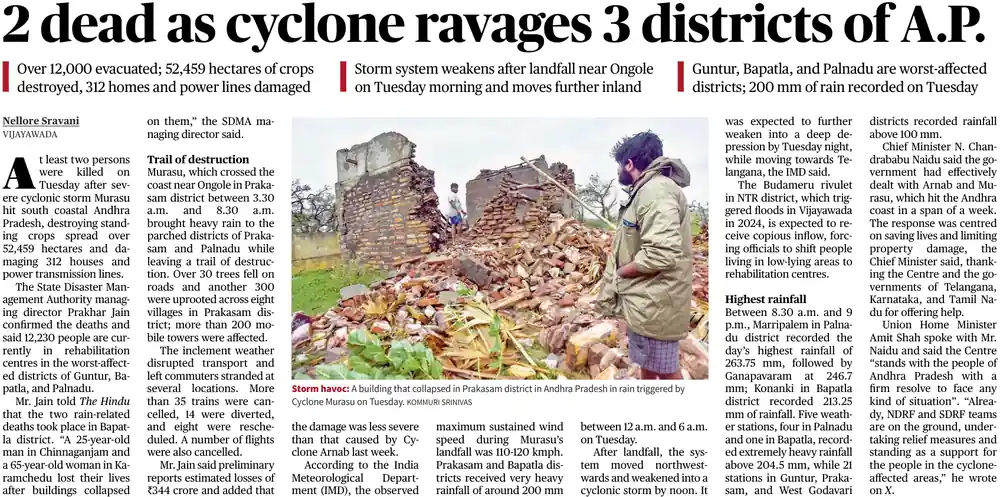
Figure 5. A photo article in The Hindu
- Headline and decks
- The main facts first: deaths, evacuations, crops and homes.
- Sources
- Every figure is attributed: the SDMA, the IMD, the Chief Minister.
- Photograph
- Placed within the text, proving one fact.
- Caption and cutline
- Storm havoc: then who, what, where and when. Credit: Kommuri Srinivas.
Click the image to enlarge. Report by Nellore Sravani, The Hindu, 4 November 2026 (Nellore, 2026).
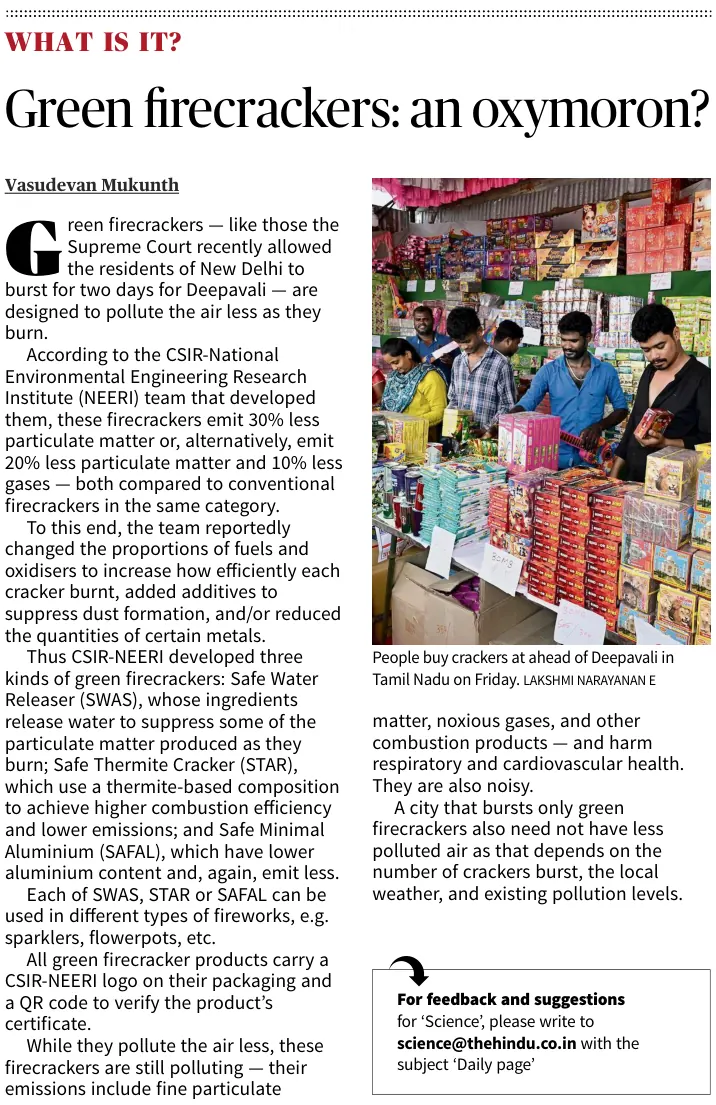
Cham case study
Figure 6. A contrast: the photograph proves nothing
- Text
- Expository and sourced: every claim about green firecrackers comes from CSIR-NEERI.
- Photograph
- A crowd at a cracker stall. It proves none of the facts in the text.
- Cutline
- No caption label, and an error: "buy crackers at ahead of Deepavali".
- Lesson
- In a photo article each photograph must prove a fact, as in Figure 5.
Click the image to enlarge. Report by Vasudevan Mukunth, photograph by Lakshmi Narayanan E, The Hindu, 4 November 2026 (Mukunth, 2026).
Caption and cutline examples
Every word must be a fact someone can check. Figures need a source at the end of the book.
Cham tipPlace each photograph beside the fact it proves.
Cham taskResearch one local subject and list three facts, each with a source and a photograph.
You are a fact-checking editor.
I am writing a photo article called “Kolkata's Trams: What Is Left”. It answers: “What are the facts?”
My research notes, each fact with its source: [paste your facts, for example: number of routes (source), daily riders (source), year the network began (source)].
My photos: [for each photo, the fact it shows and its 5 C notes], for example:
Photo 1, shows a route. Components: a tram and its route board. Composition: the board in the left foreground, the tram behind. Contrast: flat, overcast light. Clarity: deep focus, so the board can be read. Colour: a white and red route board.
Voice and style: third person, expository, no opinion. Inverted pyramid: lead paragraph, key facts, supporting detail, background.
Write: a Summary of 80 to 150 characters with the main fact, the article text in that order with the source in brackets after each fact, and a factual caption and cutline for each photo.
Rules: Write in plain, natural English, the way a careful person writes: mix short and long sentences, use everyday words, avoid filler phrases and lists unless I ask, and keep my own words wherever I gave them. Use only the facts in my notes. Never add a figure or date that is not there; write [source needed] instead. Use Indian English.
Check: list every claim in your draft with its source beside it.
What is a photo essay?
Short answer. A photo essay argues one claim. The text states the claim and each image adds a new piece of evidence for it.
Example (the claim is the author's argument, not a fact)
Slow Is a Choice
Kolkata keeps its trams because the city still values slow time.
Passengers waiting without hurrying, a tram sharing the road with cars, a conductor who knows every regular.
The congestion trams cause.
What a slow city offers.
Caption and cutline examples
The caption names the idea. The cutline is the student's own sentence, or a quotation with the name of the person who said it.
Cham tipWrite the claim in one sentence first. Drop any image that does not add new evidence.
Cham taskWrite one claim and choose three photographs, each proving a different part of it.
You are a critical reader. Do not write my argument for me.
I am making a photo essay called “Slow Is a Choice”. It answers: “Why?”
My claim, in my own words: “Kolkata keeps its trams because the city still values slow time.”
My evidence photos: 1. passengers waiting without hurrying; 2. a tram sharing the road with cars; 3. a conductor who knows every regular.
My 5 C notes for each evidence photo, for example:
Photo 1. Components: six passengers at a stop, no one looking at a phone. Composition: a long line along the lower third, open sky above. Contrast: soft afternoon light, no hard shadows. Clarity: deep focus, every face readable. Colour: muted, mostly greys and pale blue.
[Add the same five lines for photos 2 and 3.]
Voice and style: third person, persuasive. Hourglass: claim, evidence one piece at a time, what it means.
Do this: 1. tell me if my claim is one clear sentence of 80 to 150 characters; 2. say which part of the claim each photo proves, and which photos repeat the same evidence; 3. suggest one counterpoint I must answer; 4. suggest a one or two word caption for each photo.
Rules: Write in plain, natural English, the way a careful person writes: mix short and long sentences, use everyday words, avoid filler phrases and lists unless I ask, and keep my own words wherever I gave them. I will write the cutlines myself. Any quotation you suggest must name the person who said it. Use Indian English.
Check: tell me if removing any photo would weaken the argument.
What is a photo novel?
Short answer. A photo novel is a fictional story told in photographs, with speech balloons, thought bubbles and narration boxes, in the style of a comic.
Example
Next Stop
ESPLANADE, 7 A.M.
A conductor says, “Ticket, please.”
A passenger has no change.
A child quietly pays.
The conductor smiles and tears the ticket.
Caption and cutline examples
No caption and no cutline. The words go inside balloons and boxes.
Cham tipGet consent from everyone you photograph before you stage a scene.
Cham taskPlan a four-panel page with one narration box, two speech balloons and one thought bubble.
You are a comics script editor.
I am making a photo novel called “Next Stop”. It is fiction and answers: “What if?”
My idea: on a morning tram, a conductor asks for a ticket, a passenger has no change, and a child quietly pays.
Voice and style: narration in third person, characters speak in first person inside balloons. Four panels on one page: setup, conflict, turn, end.
Write: a panel script. For each panel give the shot (wide, medium or close), plan its 5 C's (components, composition, contrast, clarity, colour) in one line each, what the people do, the narration box text in capitals, the speech balloons (under 12 words each), and one thought bubble in the whole page. End with THE END.
Rules: Write in plain, natural English, the way a careful person writes: mix short and long sentences, use everyday words, avoid filler phrases and lists unless I ask, and keep my own words wherever I gave them. The opener carries the label “A staged story”. No captions or cutlines. Use Indian English.
Check: can a reader follow the story from the panels and balloons alone?
How does one book hold one idea?
Short answer. A book is one theme in one design system. Each chapter uses one form, one voice and one caption style, and each chapter shows one side of the same idea.
One idea in three sizes
Chapter title
The essence of that chapter, one idea
1 to 3 words, and not the subject
Theme sentence
What the book says, in one sentence
Appears on the theme page
Book title
The shared idea
1 to 3 words, on the cover
The chapters are the ingredients and the book is the dish. The book title does not join the chapter titles together. It names the idea they share.
Example: a book about waiting
Invented for teaching. The theme sentence is: “Waiting is how everything, people, products and animals, gets what it wants.” Read the chapter titles in order: Patience, Desire, Hunger. They move from calm to want to need, so the chapters form a chain and not three separate sets.
Book title
Cham tipSay the book in one word, the theme in one sentence and each chapter in one word.
Cham taskWrite the title, theme sentence and chapter essences for a book you want to make.
How do you find a theme and join the chapters?
Short answer. A theme is one sentence. Every chapter answers it from a different angle.
Finding the theme
Lay out your 10 to 20 best images, as prints or a contact sheet.
Sort them into piles by what repeats: a place, a colour, a type of light, a feeling, a kind of person.
Name the biggest pile. That is the subject.
Finish the sentence “This book shows that ______.” The completed sentence is the theme, and the title comes from it.
Finding a story for each chapter
Connecting the chapters
How to explain it in class
For each chapter, ask “In one word, what is this chapter really about?” Do not accept the subject as the answer.
Write the chapter essences in a row and ask what they share. That shared idea is the book title.
Read the titles in order. If they do not move, reorder them, or write one bridge sentence at the end of each Summary pointing to the next chapter.
Check that no two chapters have the same essence. If they do, one chapter is a duplicate.
Final check: the student explains the book in one word (the title), one sentence (the theme) and one word per chapter (the essences). If they cannot do all three, the book is not yet one idea.
Three tests before the book is final
Cut test
Remove a chapter. If the theme still holds, that chapter does not belong.
Sentence test
Read each chapter Summary as an answer to the theme sentence. If it is not, reframe or cut it.
Order test
Swap two chapters. If nothing changes, the order is not yet built.
Cham tipStart from what you keep noticing, not from what sounds important.
Cham taskList ten things you photographed this month and find the idea they share.
In what order do the pages of a student book go?
Short answer. Every form follows the same order, so the book reads as one object.
Front cover
Book title and student name, which is the byline.
Blank page
Title page
Title, byline and college logo.
Copyright page
Template supplied by the college.
Contents
Chapter title, category and page number.
Theme page
The theme sentence and one line per chapter.
Chapters
Running head: category on the left page, form on the right page.
Back cover
About the author in third person, a short first-person statement, self portrait, mentors, rights and college details.
Cham tipKeep the same order in every chapter, so the book reads as one object.
Cham taskLay out the opening pages of your book in this order and check that nothing is missing.
Questions students ask
How do I choose a form before I shoot?
Ask what the viewer should be able to answer at the end: what is here, what do I see, what happened, how did it feel, what are the facts, why, or what if. The question names the form.
Can one book use more than one form?
Yes. One chapter uses one form, one voice and one caption style, and the whole book carries one theme in one design system.
What is the difference between a photo series and a photo sequence?
In a series each image can stand alone on one subject. In a sequence the images need each other in a fixed order. Creative Hut teaches them as one form with this distinction.
Why is a single image written in third person?
The caption and cutline describe the subject for the reader, so the photographer stays out of the text. First person belongs to the photo experience, where the photographer is a character.
Is a photo novel fact or fiction?
Fiction. The dialogue is imagined by the photographer, so the opener carries a “Staged story” label and every person shown must consent.
References
- AFP. (2026, November 4). Moments of relief [Photograph]. The Hindu (International ed.). https://epaper.thehindu.com/
- Faruqui, A. M. (2026, November 4). Proud moment [Photograph]. The Hindu (International ed.). https://epaper.thehindu.com/
- Konwar, R. R. (2026, November 4). Hills of bounty [Photograph]. The Hindu (International ed.). https://epaper.thehindu.com/
- Mukunth, V. (2026, November 4). Green firecrackers: An oxymoron? The Hindu (International ed.). Photograph by Lakshmi Narayanan E. https://epaper.thehindu.com/
- Nellore, S. (2026, November 4). 2 dead as cyclone ravages 3 districts of A.P. The Hindu (International ed.). Photograph by Kommuri Srinivas. https://epaper.thehindu.com/
How to cite this guide
Alex, A., & Joseph, A. (2026). Seven major forms of photographic storytelling: A guide for photographers. Creative Hut Academy. https://creativehut.org/library/photographic-storytelling/
Make this your craft at Creative Hut Academy
Creative Hut Academy in Mattakkara, Kottayam, Kerala teaches photography, cinematography, editing, sound and AI filmmaking in one-year residential diplomas. Students come from across India.
Want to talk? Message us on WhatsApp, or ask Cham, our AI mentor, a study doubt.