AI filmmaking tools
The AI filmmaking tools that actually finished a feature film
A working list of the tools a film crew uses in 2026, stage by stage. What each one is for, what it is good at, and where it still fails. Reviewed every quarter by the team that made Rising Embers.
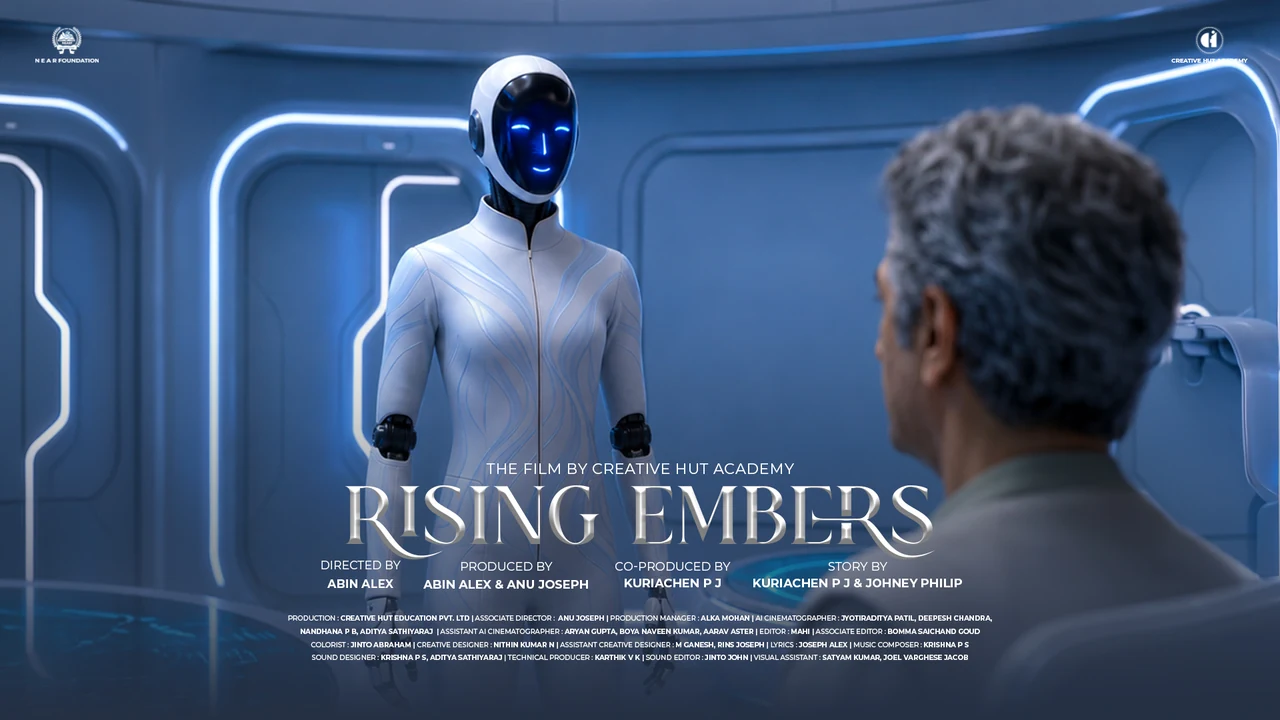
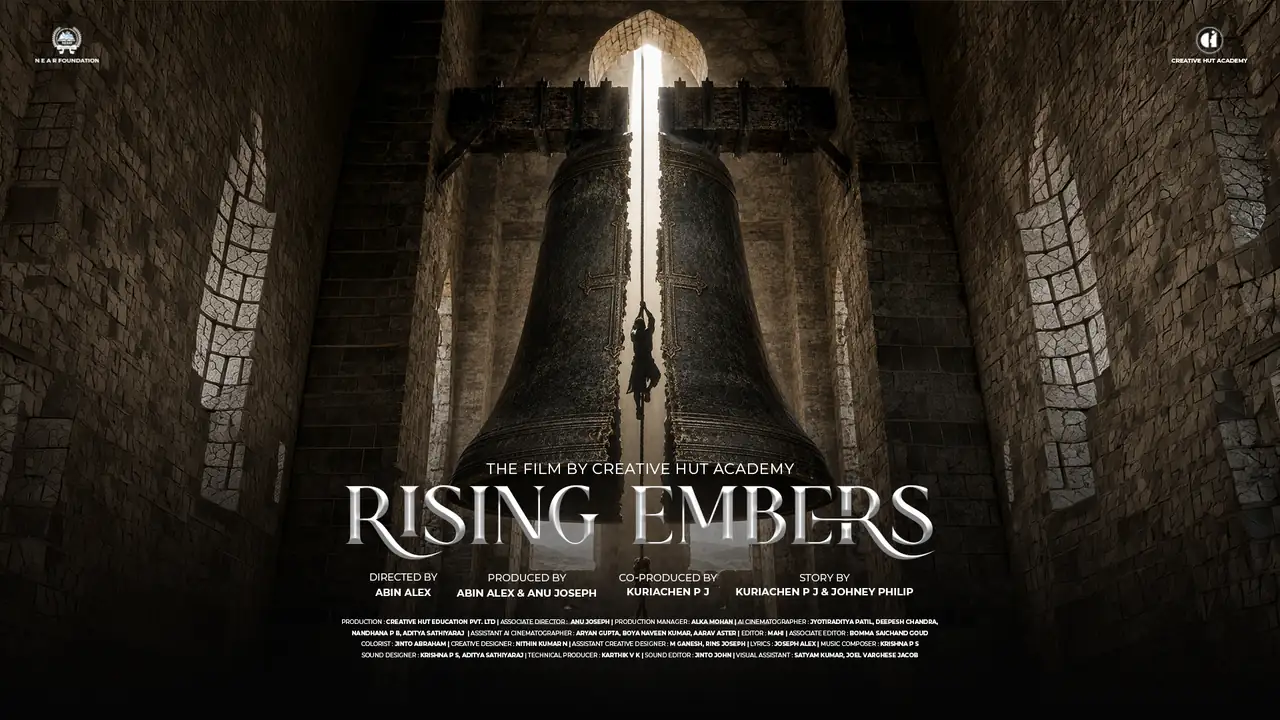
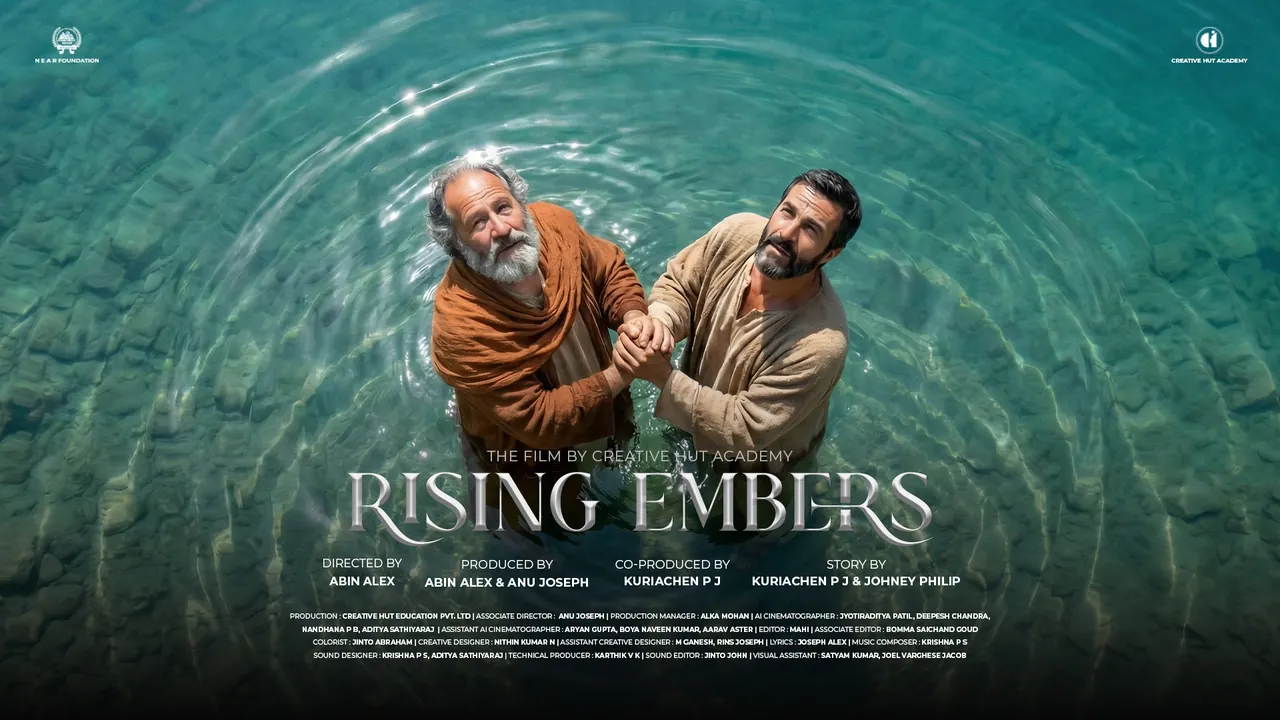
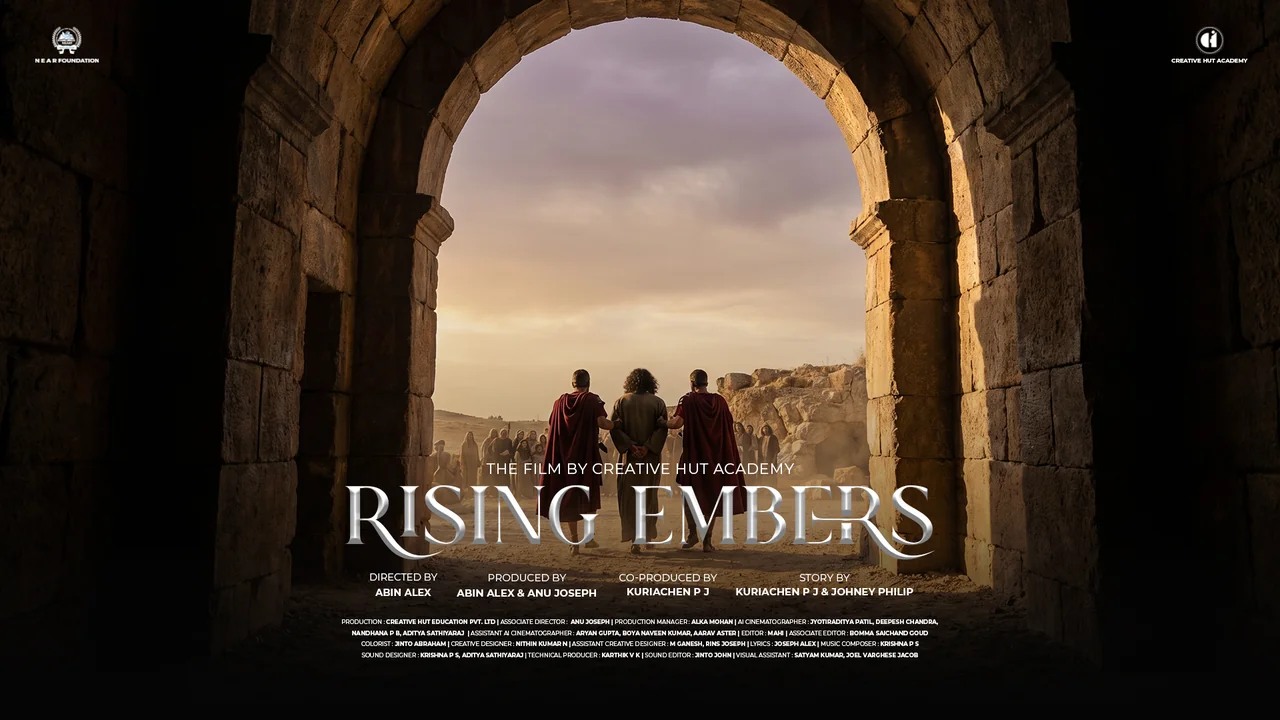
Rising Embers, made at Creative Hut Academy.
Start here
What are AI filmmaking tools?
AI filmmaking tools are software that generate or assist one part of a film: script and breakdown, still frames, moving shots, voice and music, finishing, and delivery. In 2026 no single tool does all six well. A finished film is made by chaining three or four of them, one per stage, then cutting and grading on a normal timeline.
The list below is organised by stage rather than by popularity, because the only useful question is which tool solves the problem in front of you today. A model that tops a leaderboard is not automatically the model that gets a shot into your edit.
Every entry carries what it is strong at and what it still gets wrong. The weaknesses are the more useful half. They are what decides your shot list.
- Tools change every quarter. Craft does not. This page is refreshed four times a year.
- Nothing here replaces a script, a shot list or a person who can tell when a take is wrong.
- Prices and version numbers move fast. Verify on the vendor’s own site before you subscribe.
Why this list is written by us
Creative Hut Academy in Keralam produced Rising Embers, the world’s first AI feature film made inside a film school. 130 minutes, made by 20 students in six months, released on 2 October 2026. Intake is 30 students per batch, with a maximum of 4 per state, from 15+ states, and 520+ alumni.
The stack
The six stages, and the tools that serve each one
Forty one tools, grouped by the job they do rather than the company that made them. Tools marked Taught on PDAC are on the syllabus of our one year Professional Diploma in AI Filmmaking and Digital Cinematography.
Stage 01
Story, script and breakdown
The script is still written by a person. Language models are useful here for pressure testing structure, research, scene breakdowns and schedules, not for authorship. A film that was prompted rather than written shows it in the second act, every time.
Long form script logic, structural notes, rewriting passes.
Research, world building, budget roughing, prompt refinement.
Research with live search, long context, image and video prompt drafting.
Script breakdown, tagging, scheduling and budget scaffolding.
Script to storyboard, shot by shot, inside one project.
The shot list, the beat sheet, the thing that decides whether any of the above matters.
Stage 02
Look, frames and character design
Everything downstream depends on the still frame. A video model given a strong first frame returns a better shot than the same model given a paragraph of text. This is where character sheets, style frames and location plates are built, and where a production either locks its look or loses it.
General purpose frames, complex prompts, text inside the image.
Character consistency, targeted editing, physically plausible materials. Nano Banana 2.1 followed on 6 October 2026.
Mood, aesthetic direction, poster and key art.
Photoreal environments, colour accurate brand and product work.
Fast high resolution stills, mood heavy environments, in frame text.
Typography inside the frame. Signage, titles, newspaper inserts.
Upscaling and detail reconstruction, plus a multi model generation front end.
Style control and aesthetic range, with a real time canvas.
Stage 03
Motion, the shot itself
The busiest and most volatile stage on this page. Every serious model now outputs 1080p or native 4K with synchronised audio, so resolution is no longer the deciding factor. Duration, control and character consistency are. Single pass clips now run from about ten to thirty seconds depending on the model. Anything longer is stitched.
Text and image to video with native synchronised dialogue.
Conversational video generation and editing from Google, announced May 2026.
Multi shot cinematic sequences with subject consistency, at a modest price.
Text to video from Alibaba, released August 2026.
Long form image to video, cinematic motion, high volume generation.
Text and image to video from MiniMax, released 31 July 2026.
Directed shots with image to video, video to video and camera control, plus Aleph 2.0 for editing existing footage.
Text to video with audio, from Alibaba. Version 1.0 launched in April 2026 and 1.1 followed in June.
Open source video model from Lightricks, released August 2026.
Multi shot generation with native audio, tuned for fast turnaround.
Released June 2026. Clips up to 20 seconds at 1080p, with 16 keyframes and HDR EXR export.
Multi model front end with character identity locking and Topaz upscaling built in.
Multi model front end that also generates video, alongside image, audio, stock and upscaling in one account.
Narrative concepting. Historically important, now switched off.
Stage 04
Voice, music and sound
Sound is where an AI film is usually caught out. Native audio from a video model is good enough for ambience and bad enough for dialogue. Serious productions still build the soundtrack separately, then lay it back against the picture.
Expressive dialogue, voice cloning, sound effects and dubbing.
Songs and score, with a built in studio for stems and structure.
Music generation from Google, inside the Gemini app and available to developers by API.
Dialogue cleanup, room tone removal, transcription.
Editing by editing the transcript. Fastest route through interview and doc material.
Stage 05
Edit, grade and finish
This stage is barely different from a conventional film, which is the most useful thing on this page. Generated shots arrive as clips. They still have to be cut, matched, graded, comped and delivered on a real timeline by someone who knows how.
Edit, colour, Fairlight audio, conform and delivery in one application. Free and Studio versions. Version 21 added a Photo page and new AI tools, some of them Studio only.
Editorial, with AI assisted transcription, scene edit detection and clean up. Version 26.5, from September 2026, adds generative clips and sound effects in the timeline.
Plate repair, character sheet assembly, matte painting, paint out.
Batch look development across a set of generated stills before they go to video.
Upscaling generated clips to 4K, frame interpolation, restoration.
Compositing, clean up, titles, and the paint out that saves a nearly good take. Version 26.5 adds a beta AI Assistant panel.
Stage 06
Consistency, provenance and delivery
The stage most tool lists skip, and the one that decides whether your film can be released in India. Identity has to hold across shots, and synthetic content now has to be labelled and traceable by law.
A trained character identity that persists across generations, inside Higgsfield.
Feeding a fixed set of images back into every generation. Runway, Seedance, Kling all support it.
Cryptographic provenance metadata that travels with the file.
Watch
See it on screen: Roar of Faith
An AI shortfilm presented by Creative Hut Academy, built with the same stage by stage pipeline this page maps.
11:52
Runtime
AI
Shortfilm
YouTube
Watch free
Proof, not promises
A tool list is only worth reading if someone finished a film with it
Rising Embers is the world’s first AI feature film made inside a film school. 130 minutes, made by 20 students and 4 faculty over six months, directed by Abin Alex with Anu Joseph as Associate Director. Released on 2 October 2026.
Everything on this page is written from that production, not from vendor demos. The tools marked Taught on PDAC are the ones on our syllabus, taught inside real production rather than as isolated software lessons. The set changes as the industry does, because it has to.
- Six months, not a weekend. Long form is a different problem from a clip.
- Eight original songs, in English and Malayalam, across 23 streaming platforms.
- Every shot passed through a human edit, grade and sound pass.
130 minFull length runtime
20Students on the crew
6 monthsProduction time
8Original songs
Refreshed quarterly
What changed this quarter
Six things moved between July and October 2026 that change which tool you should reach for. If you learned this stack a year ago, at least two of your defaults are now wrong.
24 September 2026
OpenAI closed the Sora API, five months after closing the web and app on 26 April. Any pipeline built on Sora has to be moved to Veo, Kling, Seedance or another model.
Leaderboard
On Artificial Analysis, Alibaba Wan 3.0 and ByteDance Seedance 2.5 now sit among the top text to video places, alongside MiniMax H3. Veo, Kling and Runway are outside the top ten on text to video, so control, price and workflow now decide the choice more than rank.
28 September 2026
Kuaishou announced Kling 4.0 with clips of up to 30 seconds, 4K output and up to ten keyframes. Rollout is staged, with full availability planned for October, so Kling 3.0 is still the version to learn on.
September 2026
OpenAI released GPT Image 2.5, which now leads the Artificial Analysis and Arena image rankings. Google followed on 6 October with Nano Banana 2.1, and Midjourney V8.2 has been the default model since 24 July.
September 2026
ElevenLabs launched Eleven v4 on 28 September, with 90 plus languages and inline audio tags. Suno launched v6 on 9 September, with plain language editing of single sections of a song.
8 October 2026
India’s IT ministry issued an advisory asking platforms to label or add context to synthetic or misleading content. The February 2026 rules on labelling and provenance still apply to your delivery. See the section below.
Positions verified against the Artificial Analysis video and image arenas and vendor announcements, October 2026. Model rankings and pricing move monthly, so verify before committing a production budget.
The honest half
What these tools still cannot do
Every list like this is written by someone selling something. Here is the part that usually gets left out. None of it is a reason to avoid AI filmmaking. All of it is a reason to learn craft alongside the software.
- Two characters in one shot. Identity blurring between interacting characters is unsolved on every platform as of October 2026.
- A shot longer than about thirty seconds. Everything beyond that is stitched, and stitching is an editing skill, not a prompt.
- Hands, fast movement and face continuity. The failures are predictable, which means they are plannable. Shot design is the fix.
- Dialogue that carries a scene. Voice models are broadcast quality in short bursts. Long emotional reads still show the synth.
- A reason to care. No model has yet produced a second act. Structure, subtext and performance judgement remain entirely human.
- Stability. Two of the tools on this page will change materially before the next refresh. Learn the pipeline, not the buttons.
India, 2026
What the law now requires of an AI film in India
In February 2026 India notified amendments to the IT Intermediary Guidelines covering synthetically generated information. If you release AI generated work in India, three obligations now shape how you deliver. They bind platforms first, but a film that arrives correctly labelled is the one that clears upload. Most international tool guides do not mention them.
Label it, visibly
Synthetic content must carry a prominent label. Visual work needs a visible label, audio needs an audible disclosure, and draft amendments would require the label to persist throughout the running time rather than appear once at the head.
Embed the provenance
Permanent metadata or provenance markers must be embedded, with a unique identifier tied to the platform that created the content. Platforms cannot allow those labels to be removed or suppressed.
Expect a three hour clock
Takedowns ordered by a court or the government must now happen within three hours, down from 36. Consent, likeness rights and clearances have to be in order before release, not after a notice arrives.
Summarised from the IT Intermediary Guidelines and Digital Media Ethics Code Rules, 2021, as amended on 10 February 2026 (G.S.R. 120(E)), and later MeitY advisories. Full links are in the Sources section below. This is general information, not legal advice. Take your own counsel before a commercial release.
What it costs
What does an AI filmmaking stack actually cost?
A student does not need every tool on this page. A working stack is three or four subscriptions, one per stage, and it lands somewhere between 30 and 120 US dollars a month depending on how much you generate. Generation, not subscription, is what makes the bill move.
Stage
A reasonable starting choice
Rough cost
Story and script
One language model subscription, whichever you already use
About 20 US dollars a month
Frames
One image model, or a multi model front end such as Magnific
10 to 30 US dollars a month
Motion
Kling for value, Veo for dialogue, Runway for control
About 0.08 to 0.14 US dollars per second generated
Voice and music
ElevenLabs for voice, Suno for score
From about 22 US dollars a month
Edit and finish
DaVinci Resolve, free version to start, Studio when you need it
Free, or about 295 US dollars one time for Studio
The machine
Your own laptop, 32 GB RAM minimum for our course
One time, and the largest single cost
Indicative vendor pricing checked October 2026, in US dollars because that is how these tools bill. Plans and per second rates change frequently. Course fees are separate and are listed in full on the PDAC page.
Learning the stack
How do you learn to use AI filmmaking tools properly?
By making something long. Tutorials teach buttons, and buttons change every quarter. The Professional Diploma in AI Filmmaking and Digital Cinematography is one year, fully residential, 30 students per batch, and the tools are taught inside a real production rather than as separate software modules.
- One year, fully residential, at a Gurukul campus in Mattakkara, Kottayam, Keralam.
- Class 12 or above, any board, any stream. No prior experience required.
- Recognised by KGTE, NCVET under Skill India, and Adobe. Powered by Sony.
- Photography and cinematography taught alongside the AI stack, because a prompt cannot fake a lighting decision.
- Admissions open. Seats are first come, first served.
- Full placement support, and 520 plus alumni working in visual media.
Questions
AI filmmaking tools, answered
There is no single best tool, and any list that names one is selling it. In 2026 a working film uses three or four tools, one per stage. If you must start with one, Veo 3.1 is a safe all rounder for shots with dialogue, Kling is good value, and Runway is built for hands on control of the shot.
Yes. Rising Embers is a 130 minute feature made by 20 students and 4 faculty over six months at Creative Hut Academy, the world’s first AI feature film made inside a film school. What AI cannot do is make it alone. Every shot still passed through a human edit, grade and sound pass.
DaVinci Resolve has a free version that is a full professional edit, colour and audio suite, and a paid Studio version at about 295 US dollars one time. Most generation tools offer a free tier that is enough to learn on and not enough to finish on: the Gemini app offers Nano Banana free up to a daily cap, and Suno and several video models run limited free quotas. Budget for paid generation once you move from tests to a real cut.
No, not as a starting point. OpenAI discontinued the Sora web and app experiences on 26 April 2026 and closed the API on 24 September 2026, so there is nothing left to build on. If you have Sora content or workflows, they have to be moved. Begin with Veo, Kling or Seedance instead.
No. Every tool on this page runs in a browser or a normal desktop application. What you need instead is a visual eye, story judgement and the patience to iterate. Students on our diploma come from every stream, including commerce and humanities, with no prior technical background.
Most generation happens in the cloud, so the model does not need your GPU. Editing, grading and compositing do. For our diploma the requirement is your own laptop with 32 GB of RAM minimum. If you plan to run open weight models such as FLUX locally, you will want a dedicated GPU on top of that.
Yes. Under the IT Amendment Rules notified on 10 February 2026 and in force from 20 February, synthetically generated audio and video that could pass as real must be prominently labelled, with a visible label on visual content and an audible disclosure on audio, plus embedded provenance metadata where technically feasible. The duties fall mainly on platforms, so a clearly labelled film is the one that clears upload. Takedowns ordered by a court or the government must now happen within three hours. Take your own legal advice before a commercial release.
Build a character sheet as stills first, then feed those images back as references into every generation. Nano Banana Pro is a strong choice for holding one face across a set, and trained identities such as Soul ID hold it across a project. One limit remains: two characters interacting in the same shot still blur into each other on every platform as of October 2026.
Single pass clips top out at around fifteen seconds on Kling 3.0, twenty seconds on Luma Ray3.2 and thirty seconds on Seedance 2.5 and Wan 3.0, against two to ten seconds on Runway Gen-4.5. Anything longer is stitched from multiple generations, which makes editing and continuity planning the real skill rather than prompting.
They have not, and the failure modes on this page explain why. Generated shots arrive as clips that still have to be matched, cut, graded, comped and mixed. On Rising Embers the AI stack changed how shots were produced and changed nothing about the judgement required to assemble them. The people at risk are the ones who learned only the buttons.
Sources
Sources and further reading
Claims about law, prices, versions and rankings trace to the sources below. Start with the Indian government sources: they define synthetically generated information (AI made audio, video and images that look real) and set the labelling duties for any film released in India. We teach this in the AI filmmaking course in India.
Indian government and law
- IT Intermediary Guidelines and Digital Media Ethics Code Rules, 2021, updated to 10 February 2026 (MeitY). Rule 2(1)(wa) defines synthetically generated information.
- MeitY FAQ on the IT Amendment Rules, 2026. What counts as synthetic content and what is excluded.
- PIB press release, 25 March 2026. Labelling with metadata and the three hour removal clock.
- Khaitan and Co legal commentary on the 2026 amendments.
Standards and benchmarks
- C2PA Content Credentials specification, version 2.3. The provenance standard behind stage 6.
- Artificial Analysis, text to video leaderboard. Independent video model rankings.
- Artificial Analysis, text to image leaderboard. Independent image model rankings.
Tool makers
- Google, Lyria 3 Pro. Music generation.
- OpenAI, Sora discontinuation notice.
- Blackmagic Design, DaVinci Resolve. Free and Studio versions.
- TechCrunch, ElevenLabs v4.
- Suno release notes and Black Forest Labs release notes.
General information, not legal advice. Source pages change often, so check the date on each before you rely on it. Reviewed October 2026.
Admissions open
Learn the pipeline, not the buttons
One year, fully residential, 30 students per batch, in Kottayam, Keralam. Admissions are open and seats are first come, first served. See the Diploma in AI Filmmaking, read the AI filmmaking course in India overview, or browse student work.